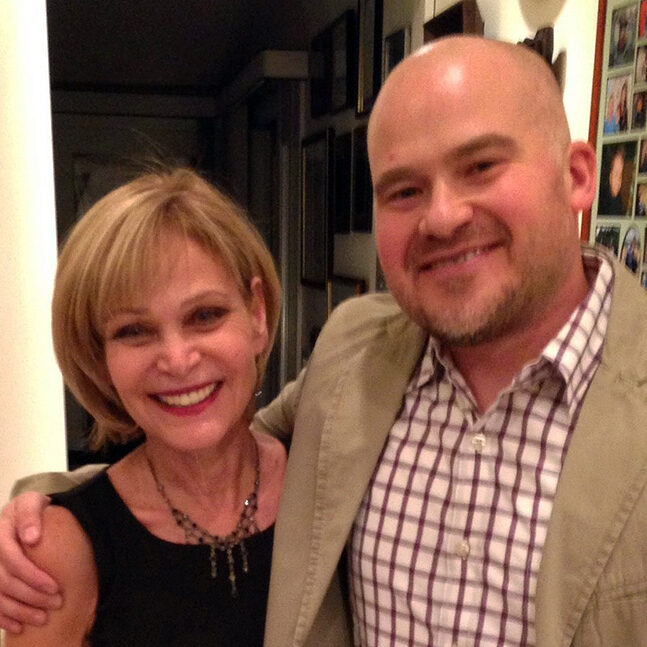
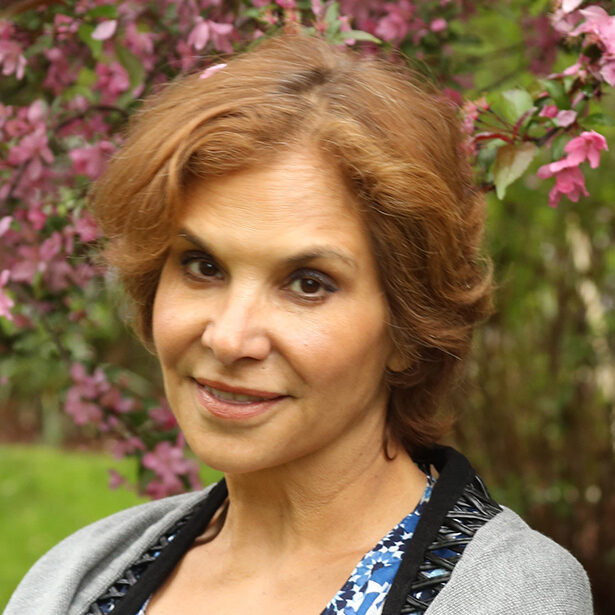
Casey lives in New York, where a Death with Dignity law has not yet been passed. She and her father, Jon, recently traveled to Oregon with her mother Jeri, who accessed their medical aid in dying law as a non-resident. Casey and Jon are advocating fiercely to bring Death with Dignity to New York.
Last fall, my mom, Jeri, was diagnosed with a rare and aggressive neurological illness called PSP. There’s no cure, and the disease moves fast. Too fast. Within months, the woman I knew—sharp, stylish, unshakeable—was already slipping away. She was still herself, still witty and full of opinion, but we could all feel time tightening around us. And so, as her condition worsened, my parents made the brave, agonizing decision: to pursue medical aid in dying in Oregon as a non-resident, which thankfully became an option for out-of-state terminally ill patients in 2023.
New York, our home, didn’t offer her that choice.
What followed was one of the most stressful, expensive, and emotional months of our lives. The only way to give my mother the peaceful death she wanted was to uproot everything. We scrambled to navigate unfamiliar medical systems, bureaucratic hurdles, and countless logistical obstacles from across the country, all while facing the grief of losing someone we loved deeply.
What Death with Dignity Really Looks Like—and Why New York Needs It
Vermont was closer (they are the other state without residency requirements for qualified terminally ill patients), but when we inquired, the first available appointment was four to six months out. No one could tell us how long the full process would take. We didn’t have that kind of time. Jeri needed to be of sound mind, physically able to travel, and still able to swallow the medication. Every day mattered.
Thankfully, advocates in Oregon responded quickly and wanted to help us. But even then, there were no guarantees. Would she qualify? Would things move fast enough? What if something changed? My parents decided to keep their plans quiet—for how could they bear saying goodbye to people, only to return if things didn’t go according to plan? It was a time of painful limbo, carrying so much secrecy and uncertainty.
Once we arrived in Oregon, everyone we met was kind. But they were also unaccustomed to such urgency. We were not like most patients who have the time to prepare and wait. We were living in a hotel, far from home, burning through money and energy and emotional reserves. I left behind my husband and two small children. We had no community support, just each other.
Finding a place for my mom to actually take her medication was another challenge. Most Airbnbs weren’t comfortable with it. A hospice center told us she’d need to stay for a week to be accepted into their community. But that’s not what she wanted. We were incredibly fortunate to find a friend-of-a-friend’s home that welcomed us. Still, it shouldn’t have to be this hard. She should have been able to die at home, in New York, surrounded by the things and people she loved. And she was robbed of that.
Death with Dignity Shouldn’t Require a Cross-Country Move
Flying across the country to say goodbye was painful, complicated, and expensive. We were fortunate to have the resources to make it happen, but not everyone does. And had I not been there to help with paperwork, appointments, and logistics—what we half-joked was the “producer” role—I don’t know how my parents would’ve managed. It would’ve been nearly impossible alone.
And yet, amid the chaos, something profound happened.
When we knew for sure that Jeri would be approved, we told friends and family. The outpouring of love was overwhelming—dozens of letters, emails, texts, and calls. People shared the many ways she’d touched their lives: a comment on red lipstick, tips on arranging furniture (she was a brilliant interior designer), words of wisdom, laughter, fierce encouragement. She got to read her living eulogy. How rare and beautiful is that?

I got to read the messages too—as her daughter. I saw her reflected through so many different eyes. She had always been a trailblazer, and people saw this final decision as another act of courage. A final act of style and strength. A final “Jeri” choice.
Love, Chai, and Goodbye
We spent those last days together in ways we’ll never forget. Listening to audiobooks, sipping chai in our bathrobes, sorting through her belongings, sharing stories. She gave away her scarves and sweaters in person. We had time to say the things we needed to say. I cannot tell you how grateful I am for this time.
The grief in the lead-up to her death was like nothing I’ve known—I cried more than I ever thought possible. But the moment she was at peace, a calm washed over us. She got what she needed. What she wanted. A dignified death on her own terms. And that is why Death with Dignity needs to be legal everywhere.
Why the Medical Aid in Dying Act in New York Is Urgently Needed
While I am beyond grateful my mom died how she intended, it wasn’t at home, and despite the beautiful moments we shared at the end, getting there was a tremendous undertaking for all of us, but especially her. No one should have to jump through these hoops to die on their own terms, and frankly, I don’t think lawmakers truly understand the burden involved until they have to. Until it’s their loved one in this situation.
This year is momentous. While too late for my mom, there is a real chance Death with Dignity could pass in New York this month. It passed the Assembly, and is now awaiting a Senate vote. If there was ever a time for us to rally together and shout to the rooftops, it is now.
This legislation would give terminally ill New Yorkers the same option my mom had, without needing to fly across the country during the worst moment of their lives. Delaware just joined the ten other states and Washington, D.C., that already offer this compassionate end-of-life option. Our neighbors in New Jersey and Vermont have it. New York should, too.
We all deserve a life of dignity. That must include the right to a dignified death.
Let’s make it possible for people to spend their last weeks in the place that feels most like home—with the people who feel like home. Join Jon and I now by taking the pledge to demand medical aid in dying laws pass in New York (and everywhere in the U.S.) to give access to this end-of-life option to all who need it.