Erin was only thirteen when her mother—a brilliant nurse, educator, and dean of Widener University’s nursing program—was diagnosed with stage 4 metastatic breast cancer. Years later, Erin watched her fiercely independent mom endure a prolonged, painful death that stripped her of the dignity she deserved.
Her mom understood end-of-life care and made her wishes clear, but in Pennsylvania, medical aid in dying (MAID) wasn’t an option. Now a social worker, Erin is sharing her story in her mother’s honor and urging lawmakers to pass the Compassionate Aid in Dying Act (HB1109/SB570) so no other family has to suffer the same loss.
A Nurse, Educator, and the Center of My World
My mom was brilliant in a way that still feels hard to describe, even all these years later. She was an RN, a nurse educator, and a leader who carried the kind of authority you don’t get from a title—you earn it by dedicating your life to other people. She became the Dean of Widener University’s nursing program, and she was a voice for so many. Her name was Dr. Susan Kun Leddy, and even now, if you search her online, she still shows up. That doesn’t surprise me. She left a mark everywhere she went.
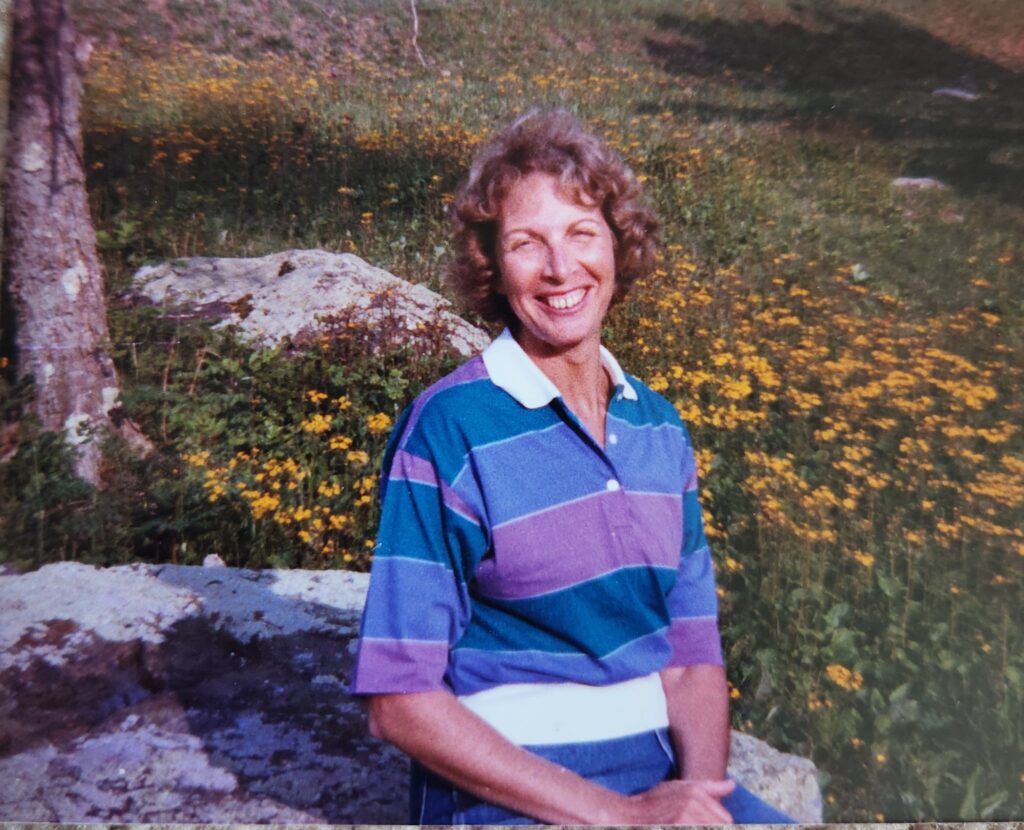
She loved teaching, and she loved pushing people to think harder. One of her favorite questions was always, “So what?” It wasn’t meant to intimidate anyone. It was her way of saying, don’t stop at the surface. Make it matter. Growing up, she seemed to know every word in existence. I used to accuse her of making words up just to mess with me, and every time she’d send me to grab our enormous dictionary—the one that literally held up a table—and make me look the word up. Every time, she was right. The word was real.
She was fiercely independent, sharp, and strong. She loved to travel and chased wonder like it was a calling. She walked the Great Wall of China, saw Machu Picchu, and fell in love with Nepal. She dreamed of seeing a tiger in the wild, and she tried, though the tiger never cooperated. She was also a crafter, the kind of person who could make something beautiful out of nothing. She had a floor loom, painted watercolors, and made sweaters and quilts. One of my biggest regrets is not letting her teach me to quilt while I still had the chance.
We also shared the same sarcastic sense of humor, which made some of our best memories feel a little strange to anyone looking in from the outside. Once, I told her I wanted to stake a claim to the things I wanted before she died. Without hesitation, she told me to grab a stack of Post-its from her desk and start sticking them on whatever I wanted so my sister would know they were claimed. So I did. We were both laughing when my sister walked in and was completely horrified.
That was my mom—brilliant, blunt, and somehow still able to find humor in the hardest moments.
When My World Crumbled
When I was thirteen years old, my mom was diagnosed with stage 4 metastatic breast cancer.
She didn’t tell me at first. She wanted to protect me and my sister, even going through surgery without us knowing. That was her nature, always taking care of everyone else, even when she was the one suffering.
For a while, she was considered “cured,” and she was even named survivor of the year by Crozer Chester Medical Center. I believe she told us about the cancer when she thought she was truly in the clear.
But it came back.
I was a freshman in college when I found out, and I only knew because I happened to be home with pneumonia when her doctor called. I watched her face change as she listened, and I knew instantly what the call meant. I made her tell me. The cancer had spread, and she had to start chemo again.
I wanted to transfer home, but she wouldn’t allow it. Even then, she was trying to protect my future, trying to keep me moving forward.
Watching Cancer Steal Her Independence
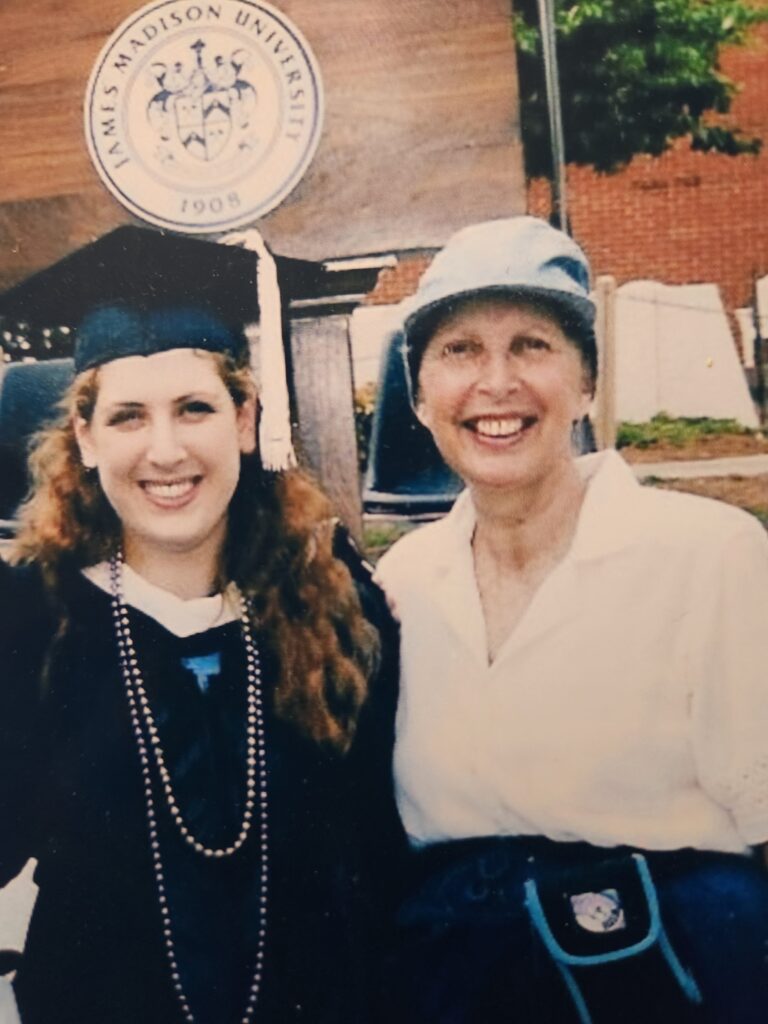
My mom fought hard. Harder than most people could ever understand. But when I was a senior in college, she was given six months to live.
Not long after, I became pregnant, and my mom became consumed with one goal: meeting her grandchild, and she did. My daughter Katie became the brightest light in her world. My mom called her “my Katie medicine,” and I don’t think I will ever forget that phrase as long as I live.
My mom decided she had to keep living until Katie was old enough to remember her. She decided that age was seven.
My mom died when Katie was five. I was 27.
For a long time, I don’t think I let myself fully see how much she was suffering. I don’t think she wanted me to. But there were moments I couldn’t ignore. Chemo damaged the nerves in her feet, and she lost her balance often. Sometimes she couldn’t control her bowels, and it humiliated her so deeply because she refused to wear diapers. She developed severe lymphedema in her arm after lymph node removal.
Every limitation was a new loss, and my mom hated needing help. She hated losing her independence more than anything.
I was the only one she would listen to, I think, because I understood her the best. I visited daily. I brought groceries. I cleaned. I did laundry. I showed up with Katie, her medicine, and tried to keep life feeling normal.
And even then, I honestly didn’t believe she would die.
What Death is Like With Limited End-of-Life Options
My mom died on her birthday: February 23rd, 2007. She was 68 years old.
We were able to sing “Happy Birthday” to her at midnight, but we weren’t there when she passed. And that continues to haunt me.
Her death was not quick. It was not gentle, and it was not dignified.
It took over a month. A month of pain, disorientation, and humiliation. She begged to leave the hospital and die at home, but when she got home, it wasn’t any better. Then she begged to go back to the hospital for more treatment—just to make the pain stop.
There was no cure and no relief. There was only torture, for her and for everyone who loved her.
I had power of attorney for my mom because I understood what she wanted, and I understood she was ready. I understood she didn’t want an intervention that only prolonged misery. And I knew what her greatest fear was: drowning. And that is exactly how she died.
I watched my brilliant, prideful, independent mother lose every part of herself before her breathing finally ceased. Reliving that day haunted me for years.
Why I Support Medical Aid in Dying
My mom was the one who taught me about Death with Dignity. At the time, it was only legal in Oregon. She had a book that detailed the process, and she made sure we understood her wishes clearly: she wanted to die with dignity.
But she never got the chance.
In 2007, health insurance was tied to the state you lived in. She couldn’t leave Pennsylvania. She was trapped in a system that forced her to endure suffering she never would have chosen for herself.
I’m a social worker now, and I’ve learned what trauma does to a family. I’ve learned how grief can change the shape of a person’s life. And I know this is bigger than one patient.
MAID is for the patients, but also for the caregivers, the loved ones, and the children who are left behind.
It’s the difference between remembering someone’s final days with peace… or carrying the kind of memories that never stop hurting. What shakes me to my core most is knowing that if my mom had this option, the option she so badly wanted, she would have died by my side.
Death with Dignity Is About Choice
As I write this story and advocate in my mom’s honor, I continue to ruminate on her famed “So what?” sentiment to her students. And that is what I ask lawmakers and opponents of this critical end-of-life option now. So what if this makes you uncomfortable? So what if talking about death is hard? The reality is that people are already dying, sometimes in agony, sometimes without peace, and sometimes without dignity.
The question isn’t whether death is sad. The question is whether we are willing to let people suffer when they can make a different choice, the ability to say goodbye surrounded by everyone they love, and to avoid needless suffering when there is no hope for recovery.
Cancer robbed my mom of her life. But the government robbed her of the death she deserved.
Pennsylvania Lawmakers Must Pass the Compassionate Aid in Dying Act
My mom wanted to be remembered. My story is her story, and this fight is my way of making the horrible way she died mean something. She was a fighter. And if her fight can help someone else avoid that kind of ending, then her life—and her death—will continue to matter.
Right now, Pennsylvania lawmakers are considering the Compassionate Aid in Dying Act (HB1109/SB570) this legislative session.
If this law had existed when my mom was dying, she might have been able to leave this world the way she wanted and deserved. I can’t change what happened to her. But I can fight to make sure other families don’t have to live with the same pain.
Donate to Support Death with Dignity
If you believe everyone deserves the right to choose a peaceful death when facing terminal illness, please consider making a donation to Death with Dignity today.
Your support helps pass and protect aid-in-dying laws nationwide, and works toward ensuring no one else is forced to endure what my mom did.