In Chinese culture, it’s considered bad luck to talk about death. There’s a superstitious fear that if you talk about dying, you’re inviting death and sorrow into the home, when the focus should be towards fortune and good luck. As a first-generation Chinese American, I’m writing to share firsthand the good luck and fortune my family experienced when my terminally ill mom accessed Washington’s Death with Dignity law in 2016, and why I became an advocate.
My Mom’s Story: The Power of End-of-Life Options
In 2004, my mom had her first bout with cancer and went through necessary treatments and surgery resulting in a swift recovery. Her experience gave her a mortality check, and during the next several years she was very aware of the life she wanted to live and made the decisions to do so. This included voting for the legalization of Death with Dignity in Washington state where she lived in 2008. “I don’t know if this cancer will come back, and I don’t know what I want to do if it does. I just want the option.”
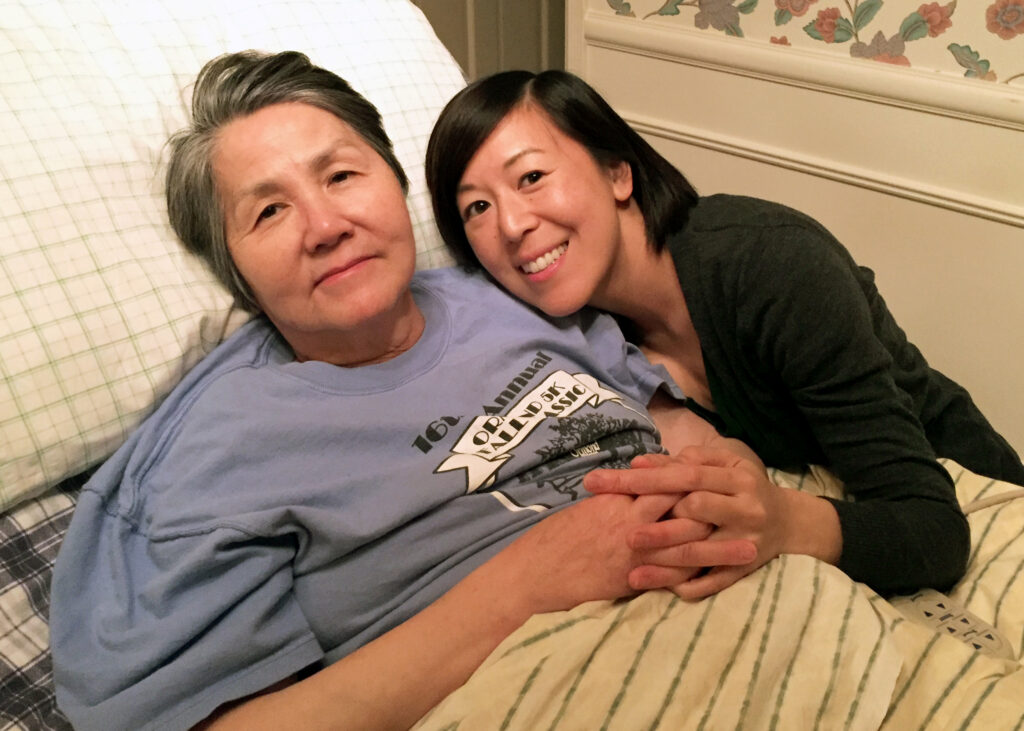
Twelve years later, when her cancer returned and her doctors confirmed it was terminal, we were faced with an unimaginable decision. The palliative care team discussed her end-of-life options, and my mom looked at us and said, “I remember Death with Dignity, I voted on this. This is what I want.”
From our previous conversation with her doctors, right up until her final day of life four months later, she was in total control. She died peacefully, surrounded by her family and supported with love, exactly how she wanted. She was fortunate to have such a peaceful death, and we were lucky to say our goodbyes and have closure. Not everyone gets this opportunity.
My Story: How I Became a Death with Dignity Advocate
In 2017, a year after she died, I shared her story in a TEDx talk, with a mission to help people understand Death with Dignity as a deeply personal decision—one we should all have the right to make. I wish I could say this was my idea, but it was my mom’s. She didn’t ask me to tell her story, she told me to—which is kind of funny if you think about it. (Of all the things to tell someone to do!) Plus, I know better than to pick a fight with my dying mom!
I did what she asked—I supported her medical aid in dying, honored her celebration of life, and shared her choice and bravery in using Death with Dignity with the world. Fast forward to eight years later, I’m now a Death with Dignity advocate and I’ve never really considered why… until now.
When I use the term ”advocate” for myself, I’m referring to more than simply agreeing with the law and voting in favor of it. My Death with Dignity advocacy looks like public speaking, donating, interviews with students and journalists, taking phone calls and responding to emails of people who’ve lost a loved one, and talking with people who are in the process of dying. My mom never asked me to do more beyond telling her story. She never said, ”Be an activist and fight for this human right.” And yet, here I am.
Among the many human rights issues at stake in our society, Death with Dignity is the one my heart beats for the most.
It would have been ”easier” to have supported my mom’s death eight years ago, told her story, made a one-time donation in her honor, and stopped there. As I write this, I’m relatively young, healthy, and live in a state where Death with Dignity is an end-of-life option. (Talk about fortune and good luck—privilege check!) Mom is resting in peace. I did what I was told, so why advocate beyond?
Finding Community in Grief and Death with Dignity
The response to her story has been incredible. Over the years, people from all over the world—all genders, ages, and ethnicities, have reached out because they feel seen. Perhaps it has little to do with who my mother was, but how she made her end-of-life choices, and the feelings she navigated in order to make the choice that was best for her. Everyone can relate to feeling scared and frustrated, fighting to be supported and heard. Dying is inevitable, and we can all relate to its unknowns.
What I didn’t expect after my TEDx talk was the amount of stories people would share with me. I’ve learned about mothers, fathers, and best friends lost. I’ve spoken with individuals who are actively dying and what they’re going through… I’m sincerely blown away and incredibly touched that strangers would share this part of their life with me. We listen and cry together. We hold each other with our eyes or share honest words of comfort over email. We’re complete strangers in different time zones and yet we’re also completely connected because of this inevitable, universal experience that is death. From these conversations, I feel we are both a little lighter, because we’re now a little less afraid to talk about dying with each other.
I can’t unhear every single one of those stories and I can’t unknow the people who shared them with me—this is why I’m a Death with Dignity advocate. What started as “in honor of mom” very quickly became “in honor of everyone.” Because at its core, these are not stories about dying, these are stories about love. A love for a cherished person, a love for oneself. A love for living life exactly the way we want, especially at the very end. As different as our humanity may be across race, gender, age, religion, politics, values, and more—the reality is that we’ll all share the same experience—one day, we will die. In the end, all we’ve got is each other.
Starting a Conversation: Creating Safe Spaces for Medical Aid in Dying
I don’t want people to feel scared or alone in dying. I’m an advocate because I want people to feel safe and supported in sharing their story and end-of-life wishes. The only way to feel safe and supported is to talk about it, and in turn, to listen. Death can feel like such an ominous and frightening space, and it doesn’t have to be. We have a choice here, and it can start with you—one person reaching out and making space for another person to listen and be curious, to foster the conversation on dying. Only when we can talk about dying, can we truly understand and respect the choices of others.
Death with Dignity is not for everyone, and that’s OK. It’s not about forcing a specific choice on anyone. It’s about giving people the space (and legal freedom) to make their own end-of-life decisions. No one should dictate how you live your life, and certainly no one, including the government, should have a say in how you die.
Death with Dignity is about empowering people to take control of their final days.
I advocate for Death with Dignity because I believe no one should be forced to die in a way that strips them of their humanity. Everyone should have the right to decide how they want to die—and for that to happen, we need to advocate fiercely, together.
My Ask to You
Make a donation. Death with Dignity is a non-profit that operates solely on donations, which are spread across work in state legislations, public policies, national and local campaigns—anything and everything to raise awareness to pass and protect this end-of-life option. Donations fund the movement.
In honor of my mom Christine, and in honor of everyone whose stories have touched my heart, I choose to be an advocate for Death with Dignity.
As the year draws to a close, I ask you to reflect on something: What kind of end-of-life experience do you want for yourself and loved ones? Now, start a conversation about it. Conversations spark curiosity, listening leads to understanding, and understanding can lead to change. Change furthers our movement. Let’s advocate for dignity, together.