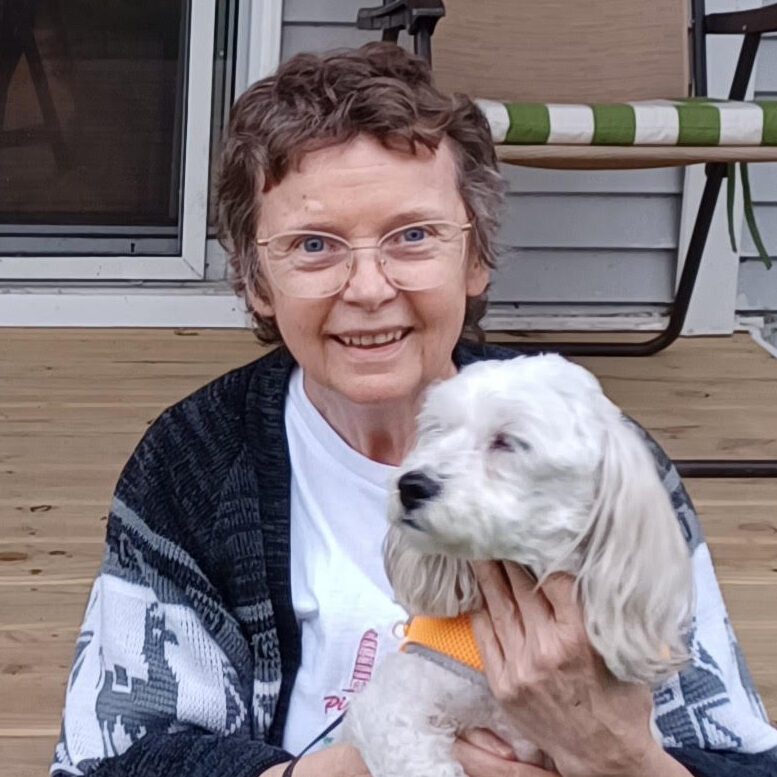
Terry is an advocate alongside Death with Dignity in Massachusetts. After losing her husband, Chuck, to ALS—and witnessing firsthand what it means to face the end of life without medical aid in dying—she is now dedicating herself to ensuring no other family is forced to endure the same prolonged suffering. Today, Terry continues to speak out in support of expanding compassionate end-of-life options in Massachusetts and across the country.
On August 23, 2025, my husband, Chuck, died after living with ALS for seven years. Because Medical Aid in Dying (MAID) is not available in Massachusetts—and because he was too ill to travel to Vermont, where it is available—Chuck made the only choice he felt was left to him. He chose to die using VSED (Voluntary Stopping of Eating and Drinking).
It was a long and needlessly difficult death that took more than ten days. He should have had another choice. And that is why I’m advocating for Death with Dignity in his honor.
Who Chuck Was Before ALS
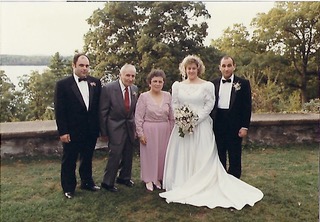
Growing up, Chuck learned the qualities that shaped him as an adult while working every summer with his extended family on a small family farm in Methuen, Massachusetts. That experience taught him to be fiercely independent, self-reliant, mentally and physically tough, and a critical thinker. Those values never left him. They guided how he lived, how he loved, and ultimately how he faced his death.
Chuck and I met in New York City in the fall of 1986 after we both transferred from different locations to the national office of the same Big 8 accounting firm—I from New York, Chuck from Boston. We always remembered exactly what we were wearing the day we met. We started dating in February 1987, married in 1988, and eventually moved back to the Boston area near his family.
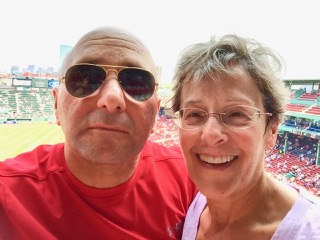
Chuck left public accounting a few years later and built a career in biotechnology, where he worked until 2019, when ALS made it too difficult to continue. He was honest, smart, kind, and funny, with an incredible sense of humor and a great smile. He loved working out, riding his bike, fishing, and going to baseball games—although we rooted for different teams. We loved traveling around the U.S., spending quiet time at home, and doting on our five dogs.
We had nearly 30 years of marriage before ALS entered our lives, but the last seven-plus years defined our love and admiration for each other in ways I could never have imagined.
Living With ALS in Massachusetts
ALS is a terminal disease of the motor neurons, affecting both the brain and spinal cord. Chuck first lost his ability to speak in 2018 and had difficulty swallowing. After a year of frustrating appointments where he was diagnosed with everything but ALS—from overusing his voice at work (he was an accountant, not an opera singer) to doctors telling him they didn’t know what the problem was—he was finally diagnosed in 2019 with bulbar onset ALS.
We cried when we got the diagnosis, but we did all we could to make every day the best possible. Chuck knew himself so well, and because of that, he kept finding ways to live a life he valued, even as the disease progressed.
In 2021, Chuck began falling, and his limbs became more and more compromised. By March 2022, he was in a motorized wheelchair and needed assistance with his daily activities. Eventually, he became 100% dependent on others for his care. For someone who had spent his entire life fiercely independent, this was devastating.
Because Chuck was a veteran, he also had support through the VA—ALS is considered a 100% disability—which helped us access the best equipment and care. Even with that support, ALS continued taking away his body piece by piece.
Chuck’s End-of-Life Decision
I will never forget a conversation we had around 4 p.m. on Wednesday, July 9, 2025. Chuck asked to speak with me and told me he had been thinking about what was coming. He said he wanted the torture to end. He told me he was tired and felt as if he were existing without any quality of life. He was concerned about the toll it was taking on both of us.
There are the moments in life that divide everything into “before” and “after.” This was one of them.
Chuck only wanted a few people to know: me, his doctor, and some loved ones. He didn’t want a parade of visitors. He wanted peace, quiet, and control over the last chapter of his life, something ALS had stolen from him each and every day.
He said he wanted me to be able to go on with my life, and I knew he meant it. He told me my care and support had been extraordinary beyond words.
It was difficult to respond because I loved him so much and wanted to keep him here. But not at the expense of his life being torture. I told him I supported his decision. Even expressing that felt impossible. I didn’t know how I would survive what was coming.
Why Massachusetts Needs Medical Aid in Dying
Chuck was adamantly clear that if a Death with Dignity law had passed in Massachusetts, he would have chosen MAID. But it didn’t pass in time. And by the time he was ready, he was too ill to travel to Vermont, where qualified non-residents can access their MAID law.
The option that should have been available to him simply wasn’t.
In 2022, Chuck began thinking seriously about his end-of-life care and wrote a directive. In it, he shared the stories of his values, what made him into the person he became, and how he wanted to be able to decide how his life would end. He lived another two and a half years after writing it.
ALS took his speech, his mobility, and his independence, but it did not take his mind, his clarity, his very essence… or his ability to make decisions about his own life.
A Difficult End-of-Life Choice
When Chuck chose VSED, the finality was clear to us all, but what we did not understand was how uncertain and prolonged the process could be.
Chuck was amazing during that time. He was able to communicate with me until the very last day. I was there with him, along with his dear cousin. And while I will always be grateful we could be with him, there is no way to describe what it feels like to watch someone you love slowly fade after they have already made the hardest decision of their life.
If he had been able to use MAID, his death would have been more peaceful. And more family could have been with him when he died. That is what Death with Dignity allows for dying patients who freely choose this end-of-life option.
I Used to Oppose Death with Dignity—Until I Understood It
I understand that people may be afraid of what this law means, because I was once one of them. I originally voted no on the Massachusetts ballot provision because I did not fully appreciate what was being proposed.
Now I do.
To me, Death with Dignity is about choice, safeguards, and compassion for people facing an incurable disease. It is about allowing someone to avoid unnecessary suffering and die on their own terms, after careful medical review, and only when they are deemed mentally capable of making this decision.
Massachusetts has the opportunity to pass a law that protects patients, respects personal autonomy, and ensures that terminally ill people can die peacefully—not over ten days, but within hours, surrounded by love and in charge of the entire process.
Advocates and champions of MAID have been working to pass this law in Massachusetts since 2012. Year after year, families have testified, written letters, shown up at the State House, and begged lawmakers to listen. And still, people like Chuck are left behind.
Chuck didn’t want to die the way he did. He wanted what so many terminally ill people want: the comfort of knowing that when suffering became too much, he could choose a gentle, peaceful end.
Massachusetts lawmakers have the power to make sure no one else has to face what Chuck faced—and what I watched, helplessly, day after day.
The fight continues. And it must.
Because this isn’t about politics. It’s about families. It’s about compassion. And it’s about giving people the dignity Chuck, and so many others who have died without this healthcare option at the end of life, deserved.
Take Action
No one should have to suffer the way Chuck did simply because of where they live. If this story moved you, please join the movement for Death with Dignity—stay informed, share this story with people who need to see it, and join us in working towards providing access to every terminally ill person in America who wants this peaceful end-of-life option if and when they need it.