Kathy is advocating alongside Death with Dignity to bring a medical aid in dying law to Kentucky, where she is supporting her husband, Steve, in navigating his terminal cancer prognosis.
I have been happily married to my husband, Steve, for 31 years. He is 84 now, and he has been my partner, my steady presence, and the love of my life through all of life’s seasons.
Our journey with cancer began in May of 2025. What started as a routine visit with his urologist quickly turned into something much more serious when his PSA levels came back elevated. Further testing revealed a 75% chance that he had an aggressive prostate cancer.
A PSMA scan confirmed our fears. Steve was diagnosed with five aggressive tumors and a rare form of the disease called intraductal prostate cancer. After hours of research, I came to understand just how devastating this diagnosis was. This type of cancer is not only rare—affecting about 3% of men—but it can grow rapidly, sometimes doubling in a matter of weeks to months. There are few clinical trials and limited research. It felt like we had stepped into a world with very little guidance and even less certainty.
Facing Limited End-of-Life Options
We waited anxiously for a week to meet with the urologist. When the day finally came, the consultation lasted less than five minutes. We were given two options: surgery and radiation, or radiation combined with hormone therapy. Because of Steve’s age and overall health, surgery was not recommended. And while radiation and hormone therapy might slow the cancer, it was unlikely to cure it.
That’s when the real journey began.
I told Steve that whatever he decided, I would stand beside him. Together, we began to explore what his life could look like moving forward. We spoke with hospice providers to better understand palliative care. We joined online support groups to hear firsthand what others had experienced with treatment—the side effects, the toll it takes, and what it means for quality of life.
After thoughtful consideration, Steve made a decision that was both incredibly difficult and deeply personal: he chose not to pursue treatment. At his age, he felt that the potential suffering from treatment outweighed the possibility of extending his life for a short time.
His doctors did not agree. We were warned about the pain and the possibility of an agonizing death. But Steve has remained firm in his decision, and I have remained just as firm in supporting him.
This is not the first time I have witnessed the realities of end-of-life suffering. Years ago, I lost my sister and my nephew, who both died at the age of 46, to the same rare and aggressive cancer called Burkitt lymphoma. I spent countless days and nights at my nephew’s bedside in a hospice unit. Despite the compassionate care he received, he did not have the peace he deserved. His death was profound, and the way he died was heartbreaking.
Those memories have stayed with me. They shape how I see this moment in our lives.
Steve will soon be 85. He has lived a full and beautiful life. He is at peace with what lies ahead, and in many ways, so am I. We share strong spiritual beliefs, and while I know there will be a deep ache in my heart when he is gone, it is not death itself that we fear, but that he will suffer during his last days.
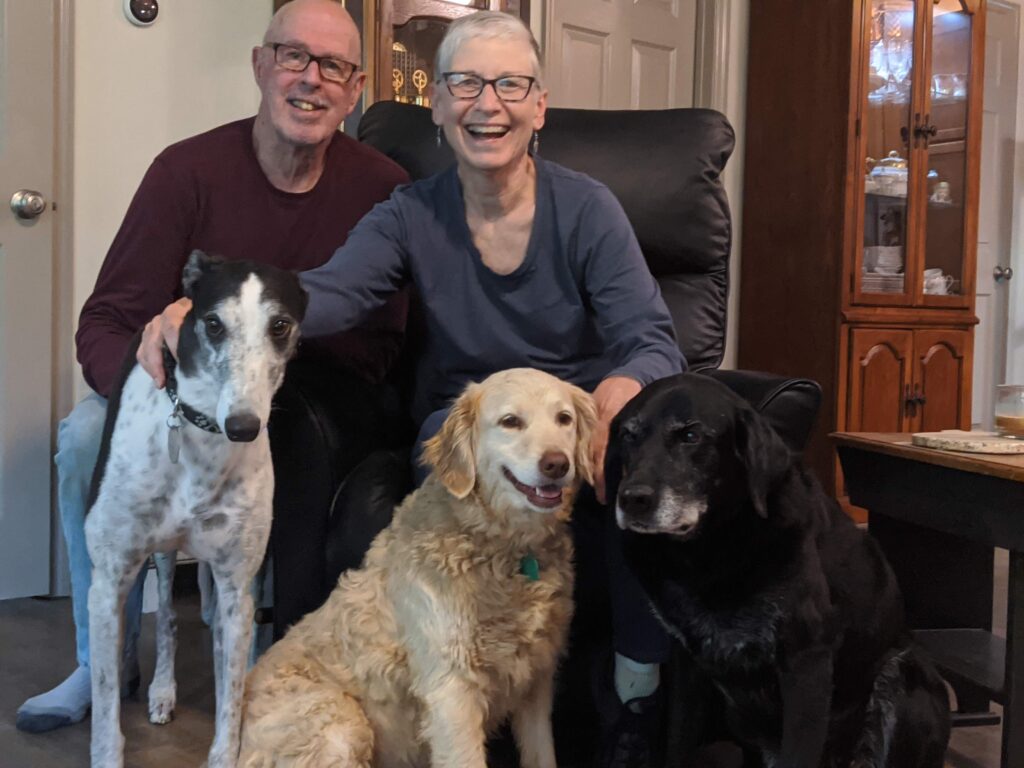
We have talked for years about our wishes at the end of life. Steve has been clear: he wants to remain at home, surrounded by the people and the place he loves. We live in a peaceful river home, with a supportive community and two sweet dogs who bring us comfort every day. This is where he wants to spend his final days. But here in Kentucky, we do not yet have a Death with Dignity law, to allow my husband to have his end-of-life wishes honored to the full extent he deserves.
Fighting for Death with Dignity in Kentucky
Right now, our state is considering two very different paths.
One is Rena’s Law (HB408), which would give terminally ill, mentally capable adults the option to voluntarily request and self-administer medication to peacefully end their lives. It includes safeguards—multiple medical consultations, confirmation of his ability to make his own health care decisions, and full awareness of all alternatives, including hospice and palliative care. This is thoughtful, compassionate legislation that honors both autonomy and care, modeled after laws that have been passed and managed carefully in thirteen other jurisdictions.
The other is HB646, a bill that moves us in the opposite direction. It would increase government interference in deeply personal medical decisions at the end of life. In a state that values small government and individual freedom, this creates a barrier to accessing quality health care that every adult person in our state deserves. Even more concerning, legislation like this can create fear among doctors and pharmacists, making them hesitant to prescribe adequate pain relief due to the risk of prosecution. That could lead to more suffering.
My husband is not asking for something radical. He is asking for the ability to make a deeply personal decision, in consultation with his doctors, about how his life will end. He is asking to remain in his home, in peace, surrounded by those that love him most.
Sharing our story is not easy. It is intimate, and it is unfolding in real time. But I am speaking out because I believe no family should have to face this kind of uncertainty when compassionate options exist.
Giving Steve the right to control his inevitable death would mean everything to him, and it would allow us to spend whatever time we have left not under a cloud of fear—but grounded in love, presence, and the life we have built together.
Take Action: Support Medical Aid in Dying Nationwide
If you believe, as we do, that individuals should have the right to make their own end-of-life decisions, I urge you to take action. I am sharing Steve’s story now, to bring awareness to lawmakers and people who may oppose this law, to ask why? Why are you standing in the way of bringing my husband and so many other dying people the option to choose this when no other options exist?
If you have faced end-of-life decisions with a loved one, share your story. Your experiences help lawmakers understand the real-life impact of these policies and can make a difference for families like mine, who still live in a state without Death with Dignity.