Holly is living with stage 4 pancreatic cancer in North Carolina, where Death with Dignity is not yet legal. She is advocating to bring Death with Dignity to her state, and across the country, so everyone can avoid the type of suffering her mother and countless people face at the end of life without access to medical aid in dying.
Before my diagnosis, my life was beautifully, wonderfully busy.
I spent my days teaching high school English, mostly Mythology, which I adored. My classroom felt alive, filled with stories of gods and heroes, and I loved watching my students find meaning in them. After school, I’d walk my dogs twice a day, knit in the evenings, kayak on Dutchman’s Creek when the weather was kind, and try to get supper on the table most nights because in our house, we always eat together. Those were the rhythms of my life. Simple. Cozy. Full.
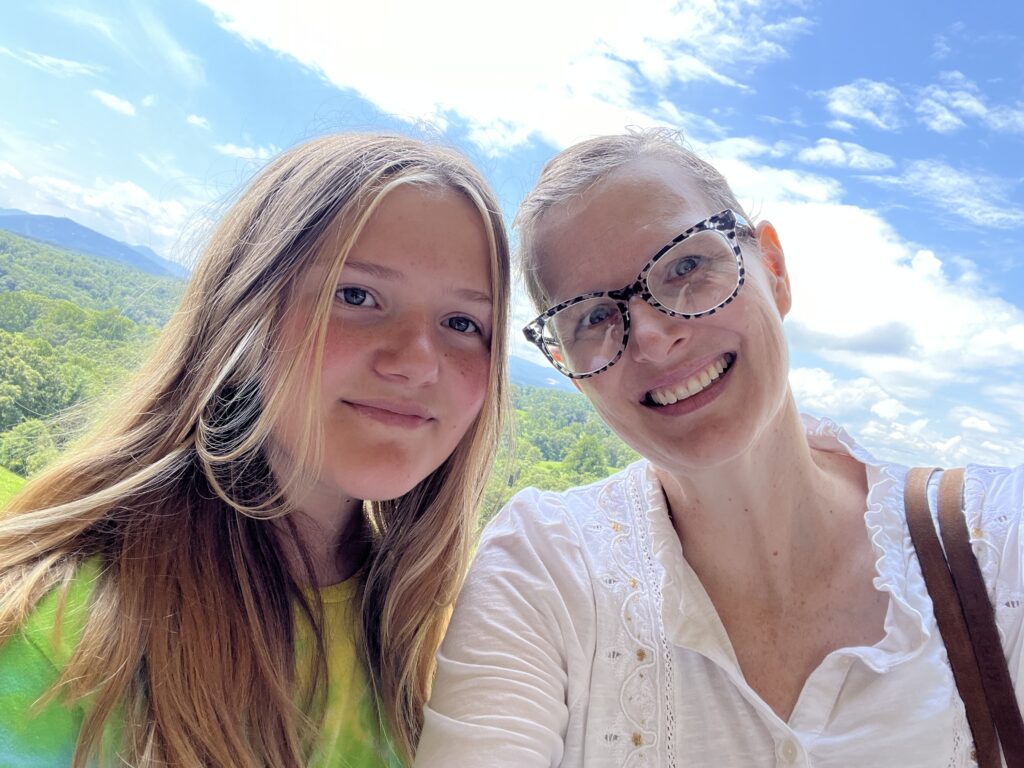
Everything changed on February 8, 2024, when I was diagnosed with stage 4 pancreatic cancer.
But even then, I didn’t—and still don’t—stop fighting. I’m in phase 1 clinical trials, doing everything humanly possible to stay alive. My youngest just turned 14. The thought of leaving my girls and my husband before they’re grown is unbearable. I joke that he is entirely unprepared for prom dress shopping, but beneath the humor is a real truth: I want to see these moments. I want to stay.
Trials have given me time far beyond the averages for people with my diagnosis. They also give me purpose. What I try today may help someone else tomorrow. Even if these drugs don’t save me, maybe they’ll save the next mother, the next daughter, the next family praying for a miracle.
But purpose alone can’t erase the reality that one day, my options will run out.
My mom died from glioblastoma in 2011. Near the end, when her mind was fading, there came a moment at Duke University Hospital when her doctor gently asked if continuing treatment would harm her. She said yes. That should have been her moment and her chance to choose a peaceful, dignified goodbye.
Instead, we waited.
My dad and I moved her to hospice. We spent two long, painful weeks watching her body catch up with what her mind already knew. There was no more joy, no more conversation, no more “her”… just a vigil of decline. I still remember tracking her urine output. I remember the last moments of deafening silence. I remember praying for it to be over and feeling guilty for praying for that.
I watched my mother die slowly, in a way that she hated. I will not put my children through the same experience.
What Death with Dignity Would Mean for My Family
When my time comes, I want something different.
I want to say my goodbyes while I can still speak. I want my final moments to be filled with love, not terror. I don’t want my children to hear the death rattle. I don’t want them to remember me in pain or have graphic memories seared permanently into their consciousness. I want them to remember me as me, their happy and proud mom.
On the day I die, I want to slip away quietly, with my dogs on my bed and my husband holding my hand. The vision I have of my eventual death is full of love—not fear.
But I live in North Carolina, where medical aid in dying is not an option.
Yes, I’ve thought about moving to another state where Death with Dignity is legal. But pulling my kids out of their incredible school, away from their friends and community, and uprooting our family just so I can avoid two weeks of suffering? That’s not love. That’s not compassion. And it’s not who I am.
I already know the place where I want to rest. I have a burial plot by a creek in a beautiful natural cemetery. I call it my “waterfront property.” My dog Annie will be buried with me someday. This is home. I deserve to die here with dignity—not somewhere else out of desperation.
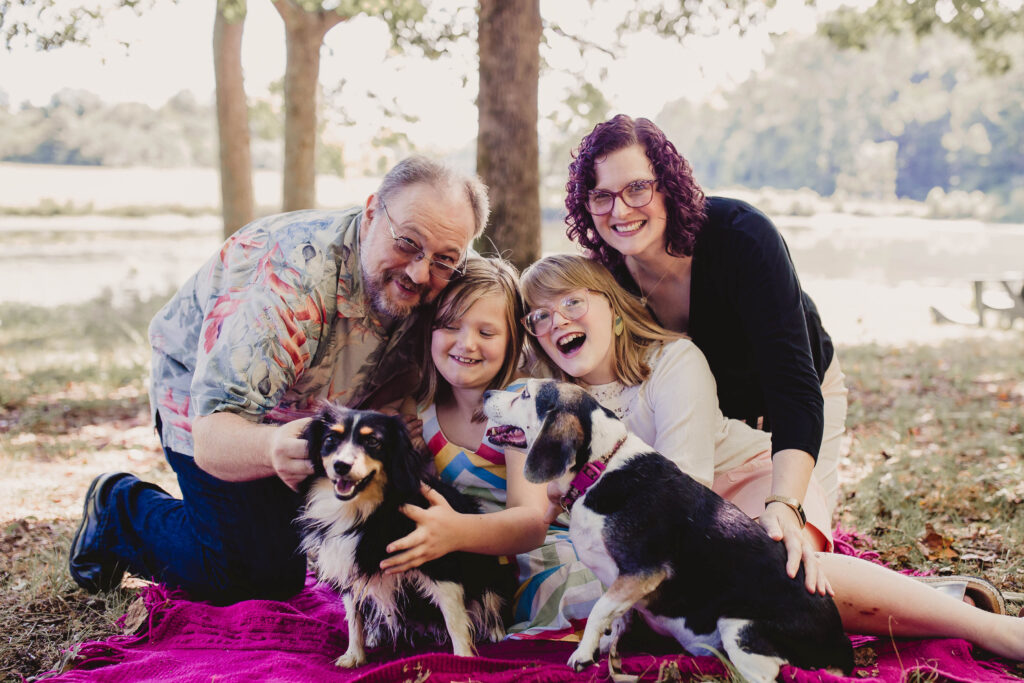
Medical aid in dying doesn’t shorten life. It shortens suffering.
Knowing this option was available to me in my home state would lift a tremendous weight. It would let me live my remaining days with less fear because I’d know that when the time comes, when the only thing left is misery, I could choose peace.
Death with Dignity is compassion—for my husband, my daughters, for myself. It is love. It is personal freedom. And it is humane.
To those who oppose this option, I ask you this: Why must suffering be mandatory? Who does it help? What purpose does it serve?
No one knows what choice they would make until they’re the one staring down a terminal, painful diagnosis in their 40s, and living through it. I hope those who judge can imagine themselves here, in my shoes, before deciding what should or shouldn’t be allowed for me or anyone else in the same situation.
I want to live. I’m fighting to live. And when the time comes, I deserve the ability to say, “enough.” But I won’t get that freedom unless this law passes in time for me.
Why End-of-Life Autonomy Should Be a Right, Not a Privilege
Right now, there are thousands of families like mine, clinging to hope, trying treatments, praying for more days, but also quietly terrified of what the end will look like.
We can do better for them.
We can do better for all of us.
I want better for me and my family.
Together, we can make compassionate choices available to every family.
I’m doing everything I can to stay here with the people I love. And when the time comes, I want the same thing every parent, every partner, every human being wants: an end that reflects the life I lived—one grounded in love, intention, and dignity.
No one should have to move states, uproot their children, or endure unnecessary suffering just to die with peace.
Death with Dignity laws make this compassionate option possible for families like mine. If you believe in that future, one where people deserve autonomy, comfort, and peace at the end of life, your support truly helps move this work forward.
Please consider making a donation today, to help the folks at Death with Dignity keep doing this meaningful work, tirelessly fighting to bring this critical end-of-life option to every dying person in the U.S.